


Solo travel offers freedom and flexibility, but choosing where to go involves more than comparing flight prices and hotel reviews. Access to medical care, personal safety, reliable infrastructure and local support can all affect the experience.
A 2026 analysis by travel insurance comparison site Squaremouth evaluated countries using a 10-point risk index that combined safety, healthcare, peace, natural-disaster exposure and internet access.
Destinations with the highest risk scores
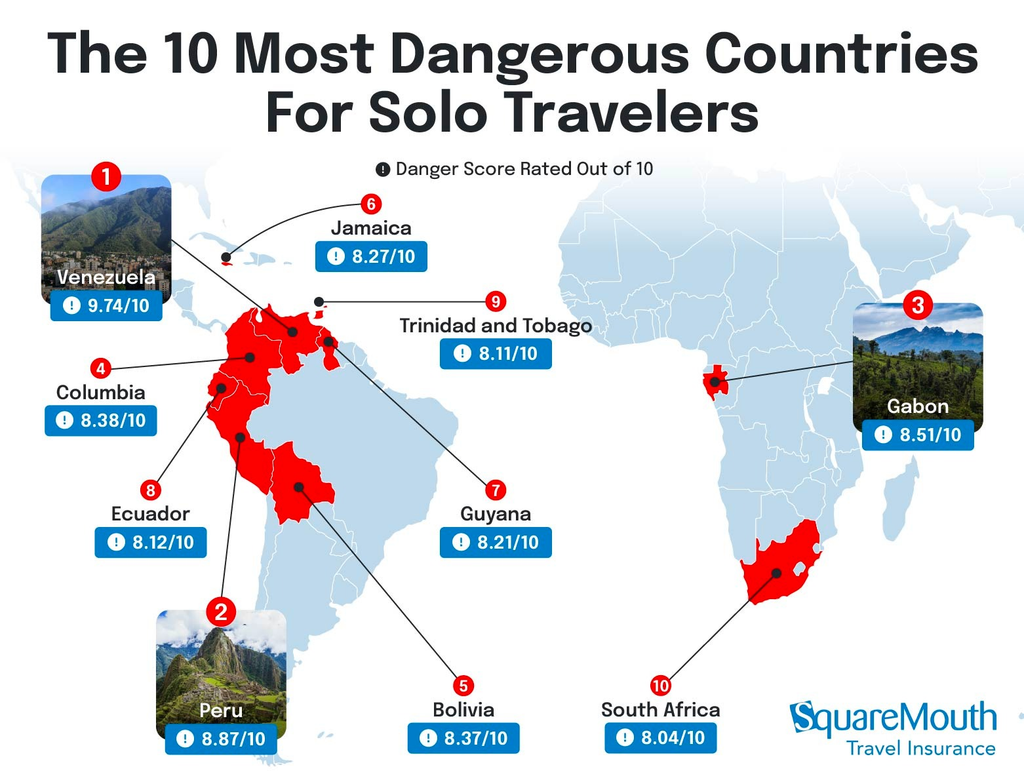
The study identified these countries as its highest-risk destinations for solo travelers:
- Venezuela — 9.74
- Peru — 8.87
- Gabon — 8.51
- Colombia — 8.38
- Bolivia — 8.37
Jamaica, Guyana, Ecuador, Trinidad and Tobago, and South Africa completed the top 10.
The factors differed by destination. Venezuela scored poorly on personal safety and healthcare access, while limited medical infrastructure was a major concern in Gabon. In Peru, safety perceptions and mobile internet performance contributed to its ranking.
Countries with lower risk scores
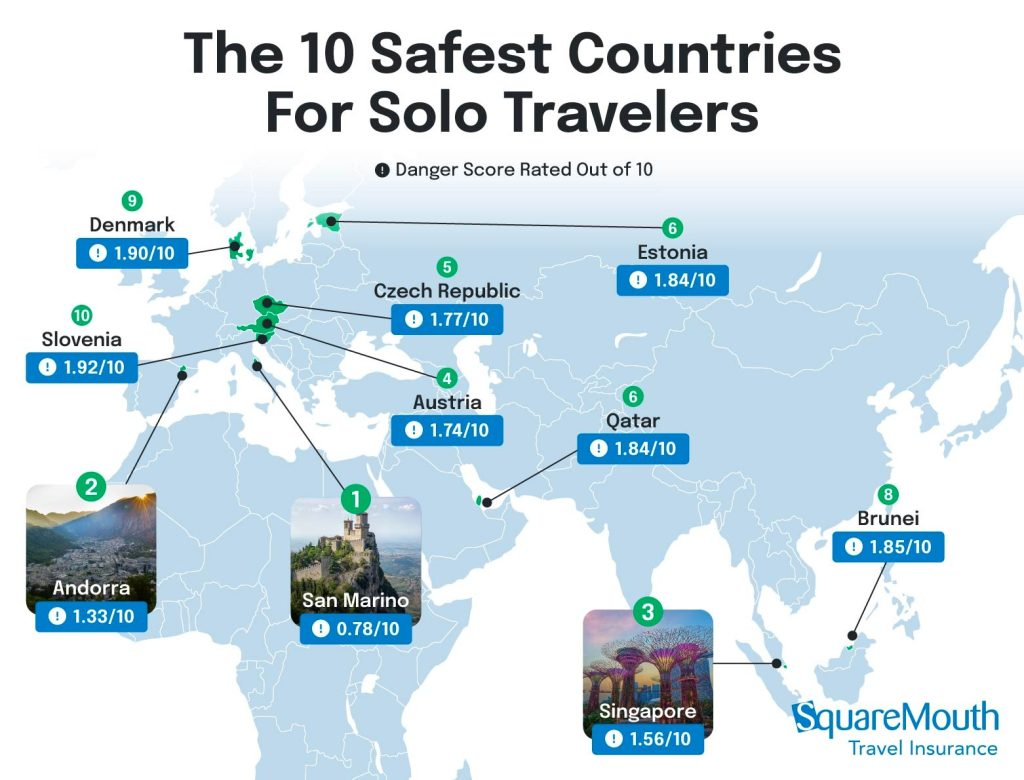
At the other end of the index, the leading destinations were:
- San Marino — 0.78
- Andorra — 1.33
- Singapore — 1.56
- Austria — 1.74
- Czech Republic — 1.77
Qatar, Estonia, Brunei, Denmark and Slovenia also ranked among the 10 lowest-risk destinations.
These scores reflect the study’s chosen indicators—not a guarantee that every area or traveler will experience the same level of safety.
What solo travelers should do before booking
• Check official travel advisories for your specific destination and region.
• Review travel insurance carefully, including emergency medical treatment, evacuation, trip interruption and exclusions related to government advisories or conflict.
• Plan a reliable check-in system with someone at home, and save local emergency contacts.
• Consider access to medical care and transportation, particularly when traveling outside major cities.
The smarter take: A destination’s reputation doesn’t tell the whole story. Use rankings as a starting point, then assess current conditions, your itinerary and the support available where you’ll actually be staying.