

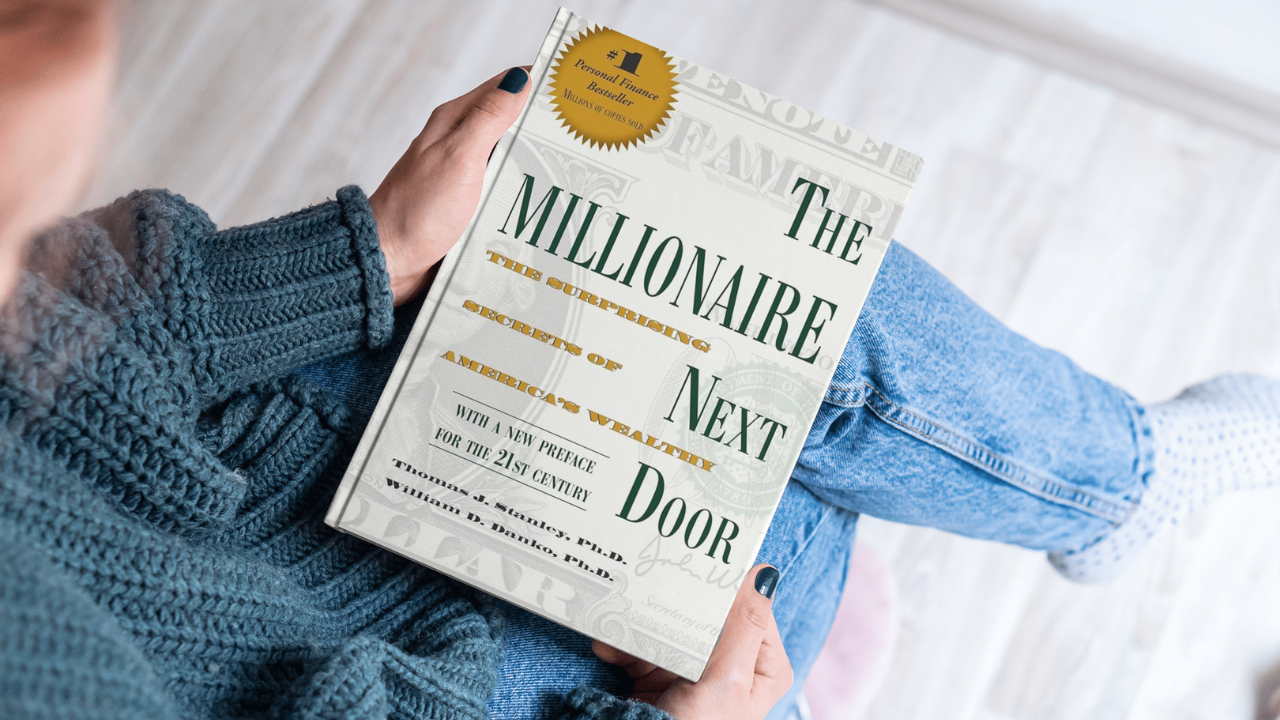
What does a millionaire actually look like?
According to Thomas J. Stanley and William D. Danko, the answer is often much less flashy than people expect. Their research found that many wealthy households built their wealth through consistent financial habits—not extravagant lifestyles or spectacular incomes.
Here are seven ideas from The Millionaire Next Door worth remembering.
1. Wealth Is What You Don’t Spend
A high income doesn’t automatically create wealth. The money that remains after spending, saving and investing is what gives you financial strength.
Someone earning $150,000 and spending nearly all of it may build less wealth than someone earning considerably less while consistently saving and investing.
2. Don’t Confuse Income With Wealth
A large paycheck can make someone look wealthy without making them wealthy.
Income is what comes in. Wealth is what you keep and accumulate.
The distinction is one of the book’s central ideas.
3. Live Below Your Means
Many financially successful households avoid constantly upgrading their lifestyle as their income rises.
That doesn’t mean never enjoying your money. It means creating a gap between what you earn and what you spend—then using that gap to build assets.
4. Make Saving Automatic
Building wealth becomes easier when saving isn’t dependent on whatever happens to be left over at the end of the month.
Set aside money first, then structure your lifestyle around what remains.
5. Be Careful About Lifestyle Inflation
A higher income can create a dangerous cycle: better salary, bigger house, newer car, more expensive vacations—and eventually little additional wealth.
The book emphasizes that consumption can rise just as quickly as income unless spending is deliberately controlled.
6. Put Your Money to Work
Wealth isn’t simply accumulated by saving cash. The long-term goal is to build assets that can grow or produce income.
That can include businesses, investments and other productive assets, depending on someone’s circumstances and risk tolerance.
7. Teach Your Family How Money Works
Financial habits don’t develop in isolation. The book also examines how families influence spending, saving and financial behavior.
Teaching children about budgeting, delayed gratification and responsible spending can be more valuable than simply giving them money.
The smarter take: Building wealth often looks surprisingly ordinary: spend less than you earn, avoid unnecessary lifestyle upgrades, save consistently and give your money time to compound.