


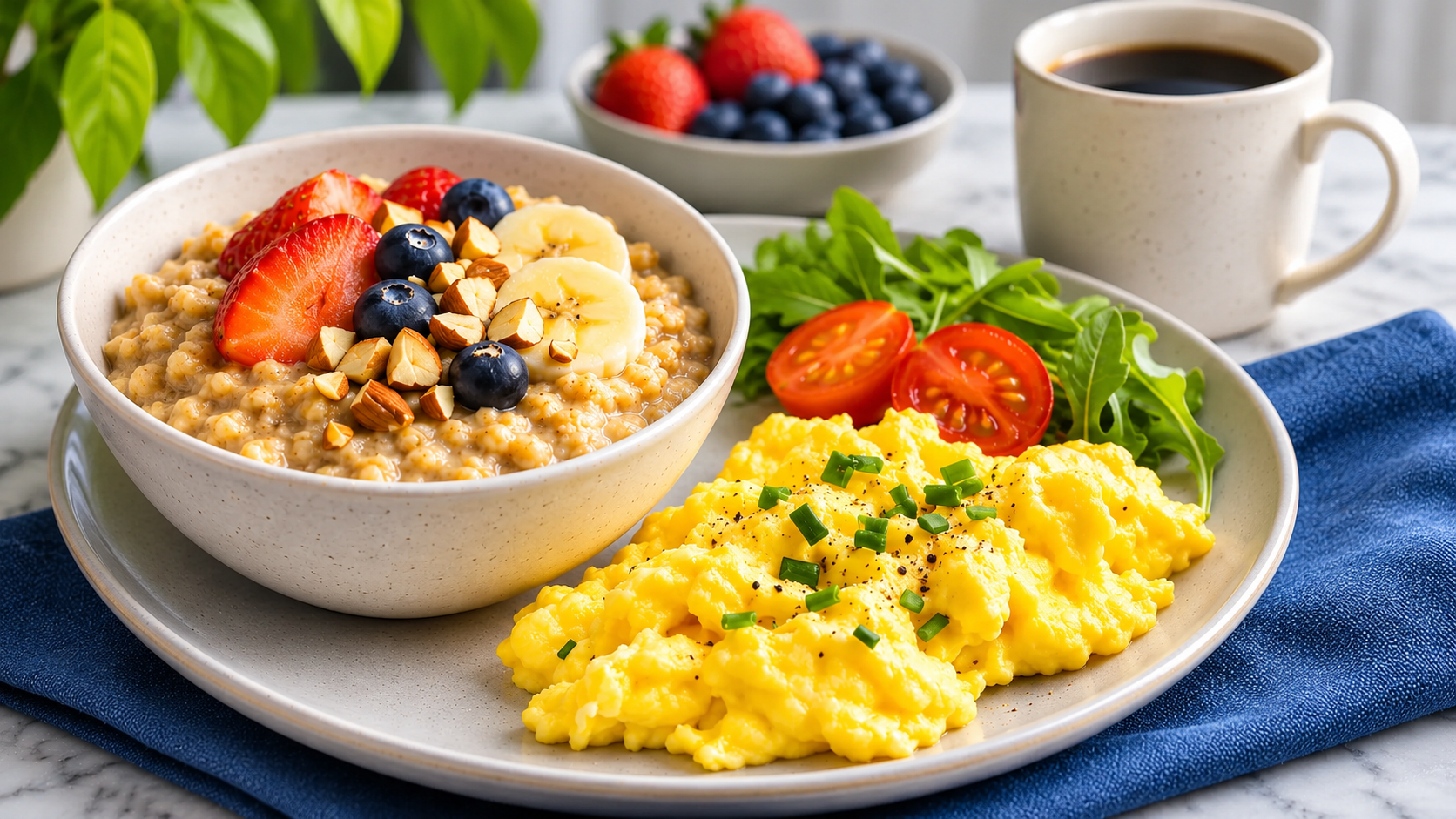
Eggs and oatmeal are two breakfast staples, but they offer very different nutritional benefits. Eggs deliver more protein, while oatmeal stands out for its fiber and potential heart-health benefits. Choosing between them depends on your nutritional priorities—and you don’t necessarily have to pick just one.
Here are five things to consider.
1. Oatmeal Has an Advantage for Heart Health
Oatmeal contains beta-glucan, a type of soluble fiber that can help lower LDL, often called bad cholesterol.
This fiber binds to bile in the digestive system, prompting the liver to use cholesterol from the bloodstream to produce more bile acids.
Eggs contain some saturated fat, particularly in the yolks. Replacing saturated fats with unsaturated fats can help improve cholesterol levels. Cooking eggs with olive or avocado oil instead of butter is one way to make that adjustment.
2. Eggs Deliver More Protein
Two large eggs provide approximately 12 grams of protein, compared with about 5 grams in a half-cup of dry rolled oats.
Eggs also contain all nine essential amino acids, making them a complete protein.
Oatmeal contributes to daily protein needs, but adding Greek yogurt, milk, nuts or seeds can make it a more protein-rich and satisfying breakfast.
3. Oatmeal Wins the Fiber Battle
A half-cup of dry rolled oats contains approximately 4 grams of fiber.
That fiber supports digestion, helps feed beneficial gut bacteria and promotes regular bowel movements.
Eggs contain no fiber. Pairing them with vegetables, fruit or whole-grain toast can help fill that nutritional gap.
4. Eggs Provide Some Unique Vitamins and Minerals
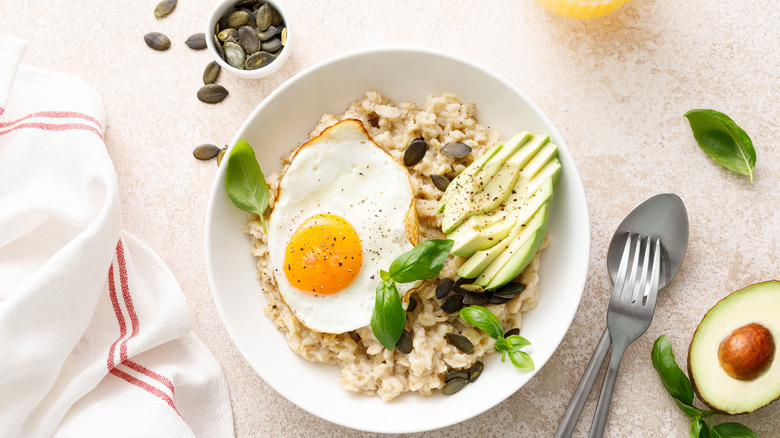
Eggs offer nutrients that plain oatmeal doesn’t naturally provide, including vitamin D, vitamin A and lutein, which supports eye health.
Both foods provide folate and iron, although eggs contain more folate while oats provide more iron.
Their nutritional strengths are different, making variety an important part of a balanced diet.
5. Your Blood Sugar Matters, Too
Eggs contain very few carbohydrates, so they generally have little immediate effect on blood sugar.
Oatmeal can raise blood sugar more noticeably, particularly sweetened varieties. However, its fiber slows the absorption of sugar.
Choosing plain oats and pairing them with protein, such as Greek yogurt or milk, can help create a more balanced meal.
The Smarter Take
Eggs and oatmeal don’t need to compete. They complement each other.
Eggs are the stronger choice for protein, while oatmeal offers more fiber and benefits for cholesterol management.
For a more balanced breakfast, combine the two or add vegetables to eggs and protein-rich toppings to oatmeal.
The best breakfast is one that delivers useful nutrients, keeps you satisfied and is enjoyable enough to make it part of your routine.
Source: The Washington Post — Eggs vs. oatmeal: Which breakfast is better for you?