


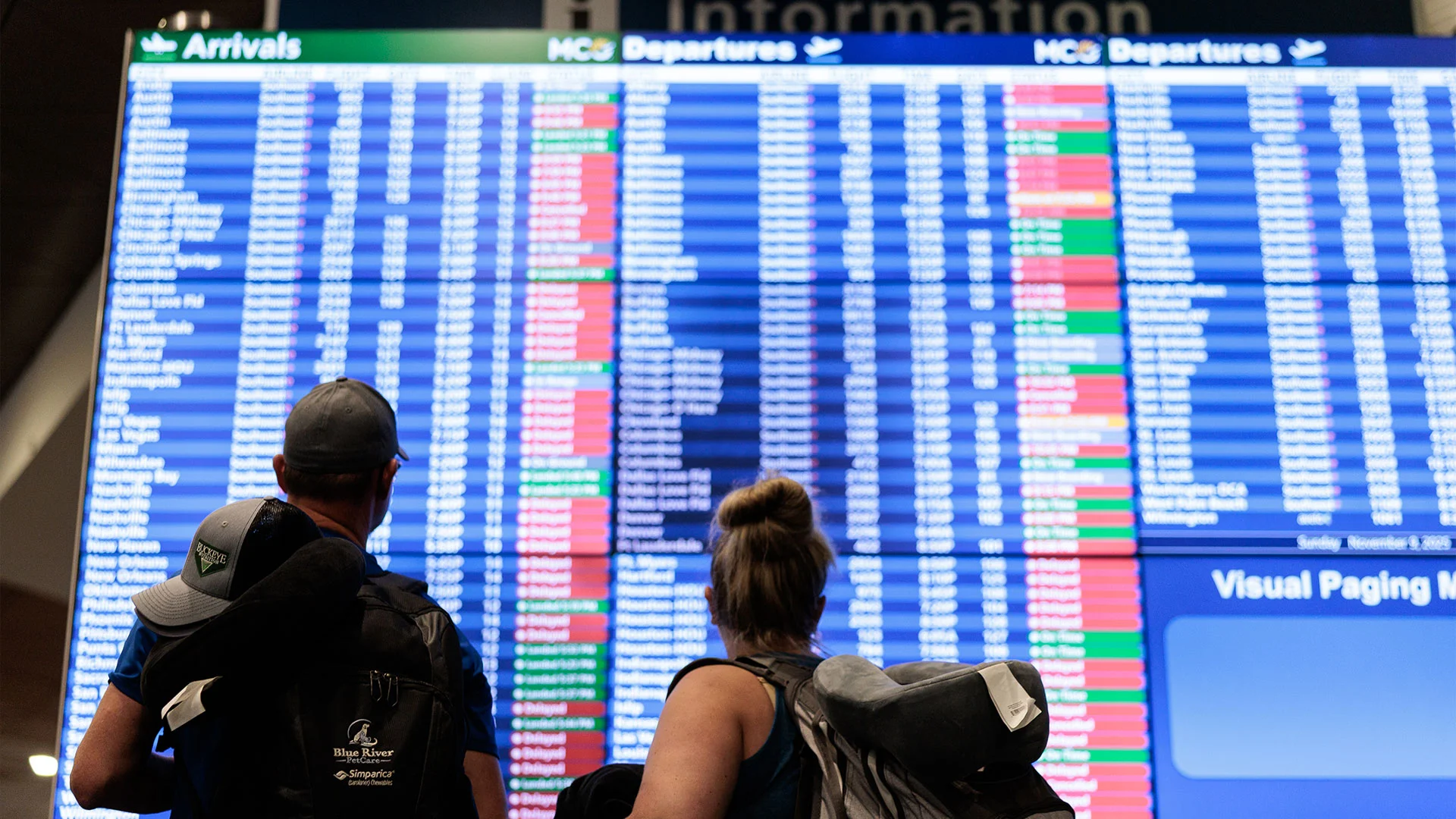
Flight disruptions are becoming harder to avoid. Knowing what to do when your plane is delayed or canceled can make the difference between reaching your destination and spending the night at the airport.
According to FlightAware, U.S. airlines have canceled roughly 2% of flights since the start of 2026, putting the year on track for the highest cancellation rate since 2022. Delays are also common, with about one in four departures delayed between Memorial Day and Labor Day, according to Cirium.
Weather, mechanical problems, staffing issues and air traffic restrictions can all disrupt travel. But a little preparation—and quick decision-making—can help you stay ahead of the situation.
1. Track Your Flight Before the Airline Calls
Don’t rely entirely on airline notifications. Check your flight status through your airline’s app and tools such as FlightAware.
One useful trick is to track the aircraft scheduled to operate your flight. Your departure may be delayed because the incoming plane is still stuck somewhere else.
Apps such as Flighty also offer aircraft-tracking features that can help you understand whether your plane is on its way.
2. Don’t Assume a Delayed Flight Means You Can Arrive Late
If your flight is still listed as on time, follow your original airport arrival schedule.
Even when an airline posts a delay, departure times can change again. A flight that was expected to leave late could move back to its original schedule, potentially leaving passengers behind.
Unless the airline confirms otherwise, it’s generally safer to arrive on time.
3. Understand Your Refund Rights
If an airline cancels your flight or makes a significant schedule change and you decide not to travel, you may be entitled to a refund.
Under U.S. Department of Transportation rules described in the source, significant changes include domestic flights arriving three or more hours late and international flights arriving six or more hours late.
Refunds must generally be issued within seven days for credit card purchases and 20 days for cash payments. Accepting alternative transportation or travel credits can affect your refund eligibility.
You can review airline commitments and passenger protections at flightrights.gov.
4. Watch the Weather—and Look for Travel Waivers
Check weather forecasts for both your departure and arrival airports, as well as any connecting airports.
When severe weather is expected, airlines may issue travel waivers that let passengers change flights without the usual change fees. These waivers can sometimes apply even to restrictive tickets.
If you know a storm is approaching, consider asking for an earlier departure or a nonstop flight.
5. Use the Airline App to Rebook
When a cancellation happens, your airline’s mobile app is often the fastest place to start.
You may be able to select another flight without waiting in a customer service line. Some airlines also offer standby options or allow changes to nearby airports.
If the app doesn’t provide a reasonable solution, speak with a ticketing agent. Airline chat, text support and social media channels may also help when phone lines are overwhelmed.
6. Consider an Airport Lounge
If you have access to an airline lounge, it can be a useful place to wait and speak with experienced airline agents.
United Club and Delta Sky Club locations, for example, may have staff who can help with flight changes. Third-party lounges may offer a quieter place to recharge, although their employees generally cannot handle airline-specific reservations.
7. Compare Other Flights Before Options Disappear
If your airline cannot get you to your destination within a reasonable time, look at flights on other carriers.
In some situations, purchasing a new ticket yourself may be the fastest way home. However, don’t assume the original airline or your travel insurance will reimburse that new ticket.
If you decide to book independently, keep your original ticket and all receipts. You may still qualify for a refund on the unused flight.
8. Have an Airport Hotel Backup Plan
Major disruptions can quickly fill nearby hotels, especially during storms and busy travel periods.
Identify a few airport hotel options before you need them. If you’re stranded overnight, compare cash prices with points, since award stays can sometimes offer better value when demand is high.
9. Ask About Same-Day Standby
If you reach the airport early, ask whether you can get on standby for an earlier flight.
This isn’t guaranteed, especially when flights are full, but it can help you avoid a missed connection or an overnight stay. Airline rules and fees vary, and elite status may provide priority.
10. Pay for Flights With a Card That Includes Travel Protection
The right credit card can help cover unexpected expenses when a covered disruption occurs.
Cards such as the Chase Sapphire Preferred, Chase Sapphire Reserve and American Express Platinum include certain trip delay or cancellation protections, subject to eligibility requirements and policy terms.
Depending on the card and situation, covered expenses may include meals, lodging and transportation. Weather-related disruptions can qualify under some policies, even when the airline does not provide compensation.
Save receipts, document the disruption and check the specific benefits guide for your card. Coverage is not automatic, and exclusions and minimum delay requirements apply.
The Smarter Take
A delayed or canceled flight doesn’t have to ruin your trip. Track your aircraft, understand your refund rights, keep your airline app ready and act quickly when plans change.
Most importantly, don’t wait until every other passenger is competing for the same remaining seats and hotel rooms. The earlier you explore your options, the more control you may have over getting to your destination.