

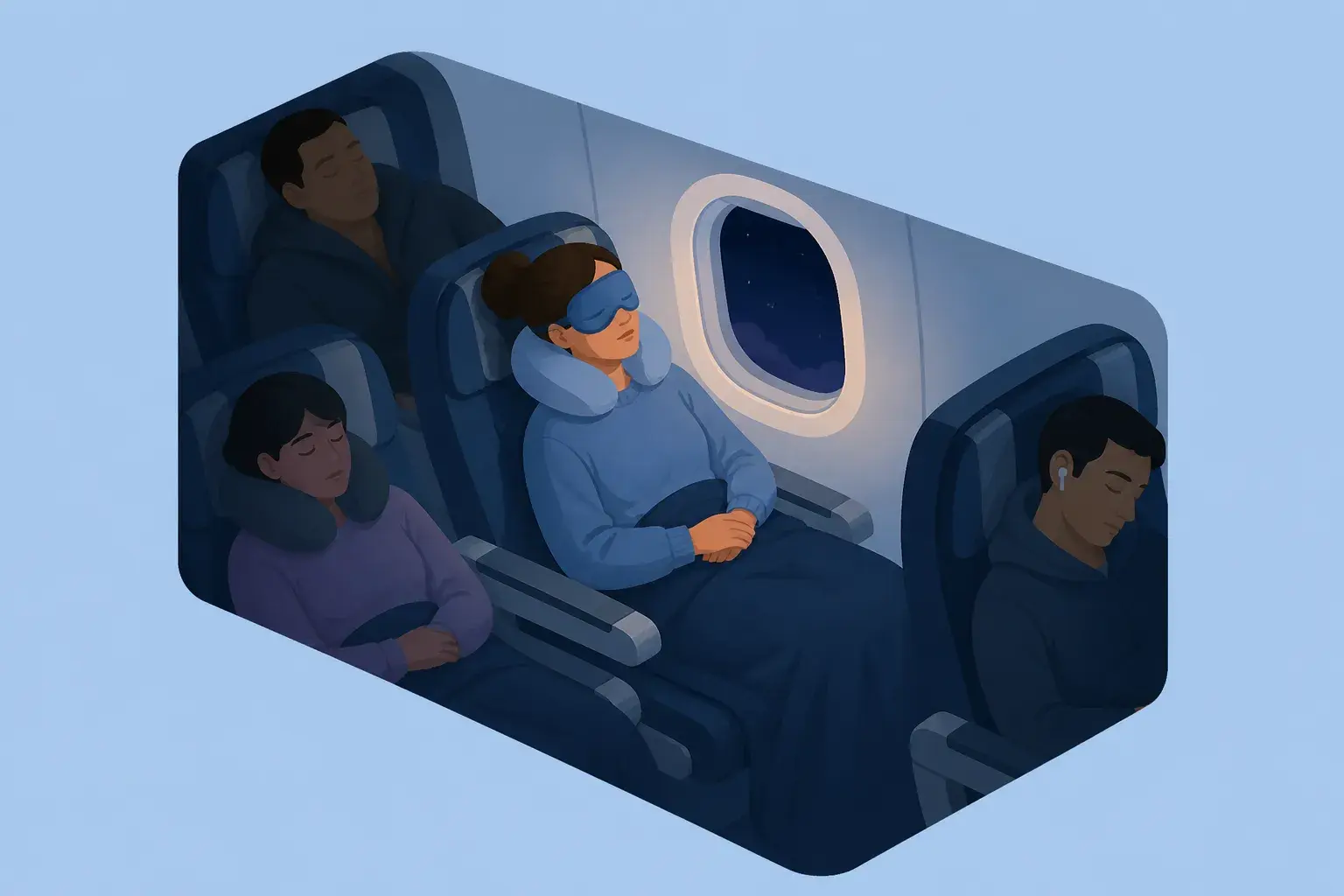
Falling asleep on a plane can feel impossible. Tight seats, cabin noise, bright screens, temperature changes, and restless passengers all compete with your body’s need for rest.
But while economy-class sleep may never feel like a hotel bed, a few smart choices can make it easier to get comfortable and arrive feeling more refreshed.
Start with the right seat
Your seat can make a significant difference to your ability to rest.
- Choose a window seat if you want somewhere to lean your head without being disturbed by passengers leaving their seats.
- Avoid busy areas near lavatories and galleys when possible, where foot traffic and noise can interrupt sleep.
- Consider extra legroom. Premium economy may offer more space, but compare the added cost against the length of your flight and how much comfort matters to you.
A bulkhead seat can provide extra legroom, but check whether it reclines and remember that these rows may have bassinets or other restrictions.
Pack a small sleep kit
You don’t need expensive travel gadgets to improve your chances of sleeping. Focus on items that address the biggest distractions.
- Noise-canceling headphones or earplugs to reduce engine noise and nearby conversations.
- An eye mask to block overhead lights and sunlight.
- A supportive neck pillow to help keep your head from falling forward or sideways.
- Layers of comfortable clothing so you can adjust when the cabin feels too warm or cold.
Avoid resting your head directly on the tray table. An awkward position can leave you uncomfortable, stiff, or numb.
Prepare your body for rest

Staying hydrated, relaxing before trying to sleep, and limiting distractions can help. Reading, listening to calming music, meditation, or progressive muscle relaxation may make it easier to settle down.
Be cautious with alcohol. Although it may initially make you feel sleepy, it can disrupt sleep quality and worsen dehydration. Caffeine close to your intended sleep time can also make it harder to drift off.
Think carefully before using sleep aids
Melatonin and prescription sleep medications are not interchangeable solutions, and neither guarantees restful sleep. Medication can cause side effects or lingering drowsiness, particularly when timing and destination time zones are involved.
Speak with a healthcare professional before using medication to sleep on a flight. Never combine sedatives with alcohol, and avoid taking a sleep aid when you need to remain alert during the journey.
The smarter take: Don’t try to solve every sleep problem at once. Choose a suitable seat, bring an eye mask and noise protection, support your neck, and create a calm routine before settling in. You may not sleep through the entire flight, but reducing a few major disruptions can make the journey more comfortable.